
Charleston Marks Turning Point in Melges 24’s 2026 Season
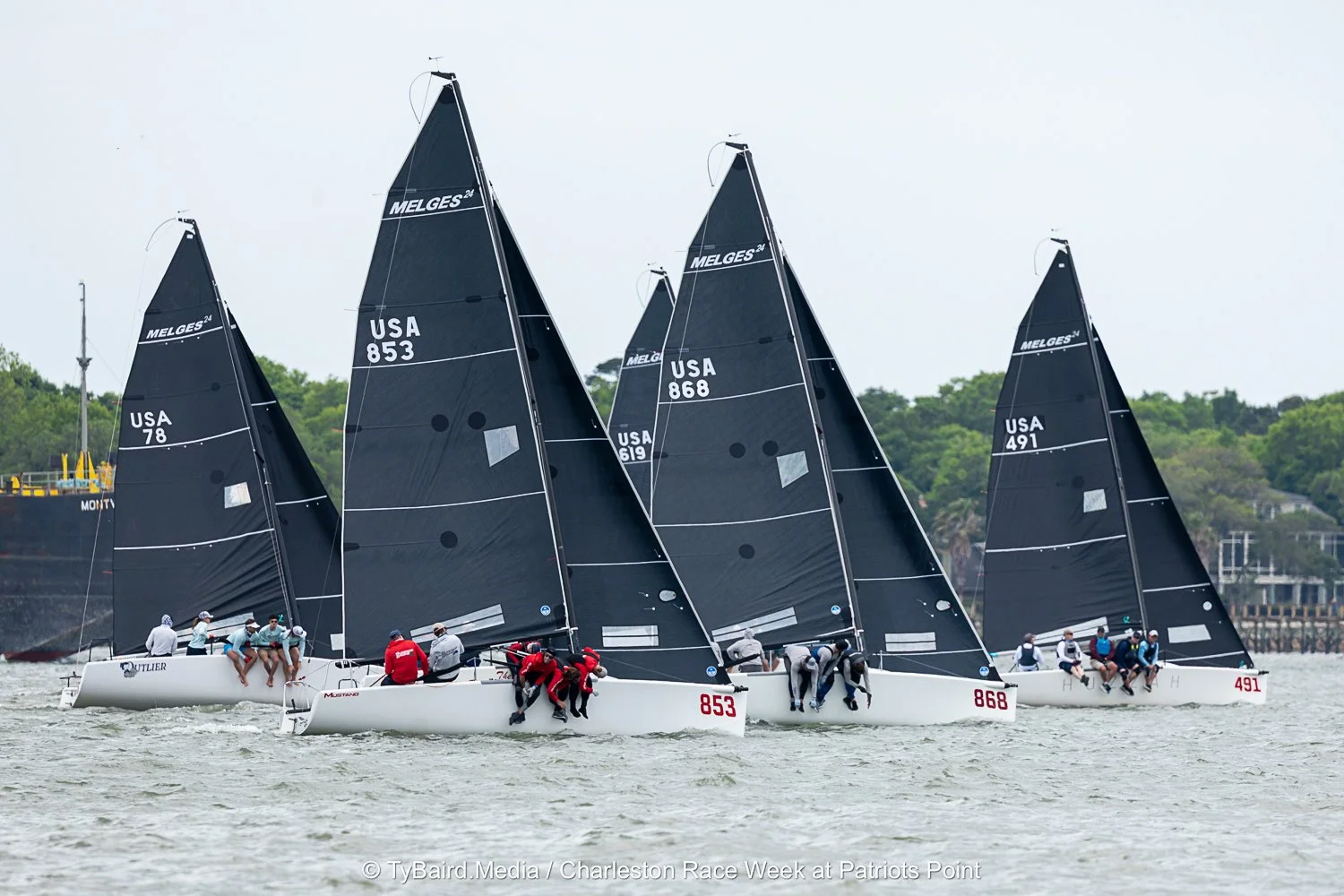
Bow-to-bow off the line in Charleston—Corinthian Melges 24 teams mixing it up with the front-runners as Laura Grondin’s Dark Energy and Dick Kalow’s Mustang lead the charge. Big fleets, tight racing, and more to come in 2026. Photo: Ty Baird Media / Charleston Race Week at Patriots Point
The 2026 season for the Melges 24 Class is no longer taking shape—it is accelerating.
At the recent edition of Charleston Race Week at Patriot’s Point, one of North America’s most respected early-season regattas, the fleet delivered more than just results. It delivered clarity. Three events into the North American Sailing Series, the defining themes of the season are now unmistakable: rising participation, deepening competition, and a level of talent that continues to elevate the class on both a national and international stage.
Charleston provided the ideal proving ground. Three days of classic harbor conditions demanded precision, range, and consistency—qualities that increasingly define success in today’s Melges 24 fleet. At the front, Laura Grondin’s Dark Energy team, which included Lucas Calabrese, Ian Liberty, Tommy Dietrich and Ted Hackney, executed with authority, leading the event from start to finish in a composed, wire-to-wire performance. It was a statement win, not simply for the regatta, but within the broader context of a season where margins are tightening and opportunities are limited.
That pressure is perhaps most evident at the top of the View 2026 Melges 24 North American Sailing Series Results (After 4 Events) standings. Peter McClennen at the helm of Gamecock continues to hold the overall lead, as his consistency across venues sets the standard for the rest of the fleet. Grondin’s Charleston victory closes the gap, positioning Dark Energy firmly within striking distance as the series enters its next phase. Just behind, Dick Kalow’s Mustang, Steve Boho aboard The 300, and Michael Goldfarb’s WarCanoe remain tightly grouped—an indication that the leaderboard is far from settled as the fleet transitions into the summer schedule.
Yet one of the most compelling storylines of the 2026 season lies beyond the overall standings.
The strength of the Corinthian division continues to redefine expectations within the class. At Charleston, John Poulson and his Longshot team—Steve Liebel, Jason Chavez, Jillian Aydelotte, and Briar Robertson—secured the Corinthian win, propelling them to the top of the amateur leaderboard. Close behind, Jamie Torres on Smile and Wave and Davis McLeod’s Mojo remain firmly in the hunt. What distinguishes this year’s Corinthian competition is not simply participation, but parity—where experienced owner-drivers and teams are not only competing within their division, but increasingly influencing the overall results sheet.
That depth is a defining asset of the Melges 24 Class. Across the fleet, it is not uncommon to find campaigns that blend seasoned professionals—including Olympians and America’s Cup talent—with highly capable Corinthian teams, creating a competitive environment that is both accessible and uncompromising. It is this balance that continues to attract new programs while retaining long-standing teams, reinforcing the class’s position as one of the most dynamic one-design sportboat platforms in the world.
With the southeastern leg of the schedule now complete, attention turns to the summer series and the Quantum Melges 24 Great Lakes Cup, where a new set of conditions, and a new layer of pressure awaits. Each remaining event now carries heightened significance as teams refine their programs and position themselves for a defining run through the season’s three major championships: the Canadian Nationals in Nova Scotia this June, the U.S. National Championship in Traverse City in August, and ultimately the Melges 24 World Championship in Harbor Springs following in September.
If the first half of the season has revealed anything, it is this: there is no single path to the top of the Melges 24 Class in 2026. Success will demand consistency across venues, versatility across conditions, and execution under pressure.
And as Charleston made clear, the margin for error is only getting smaller.
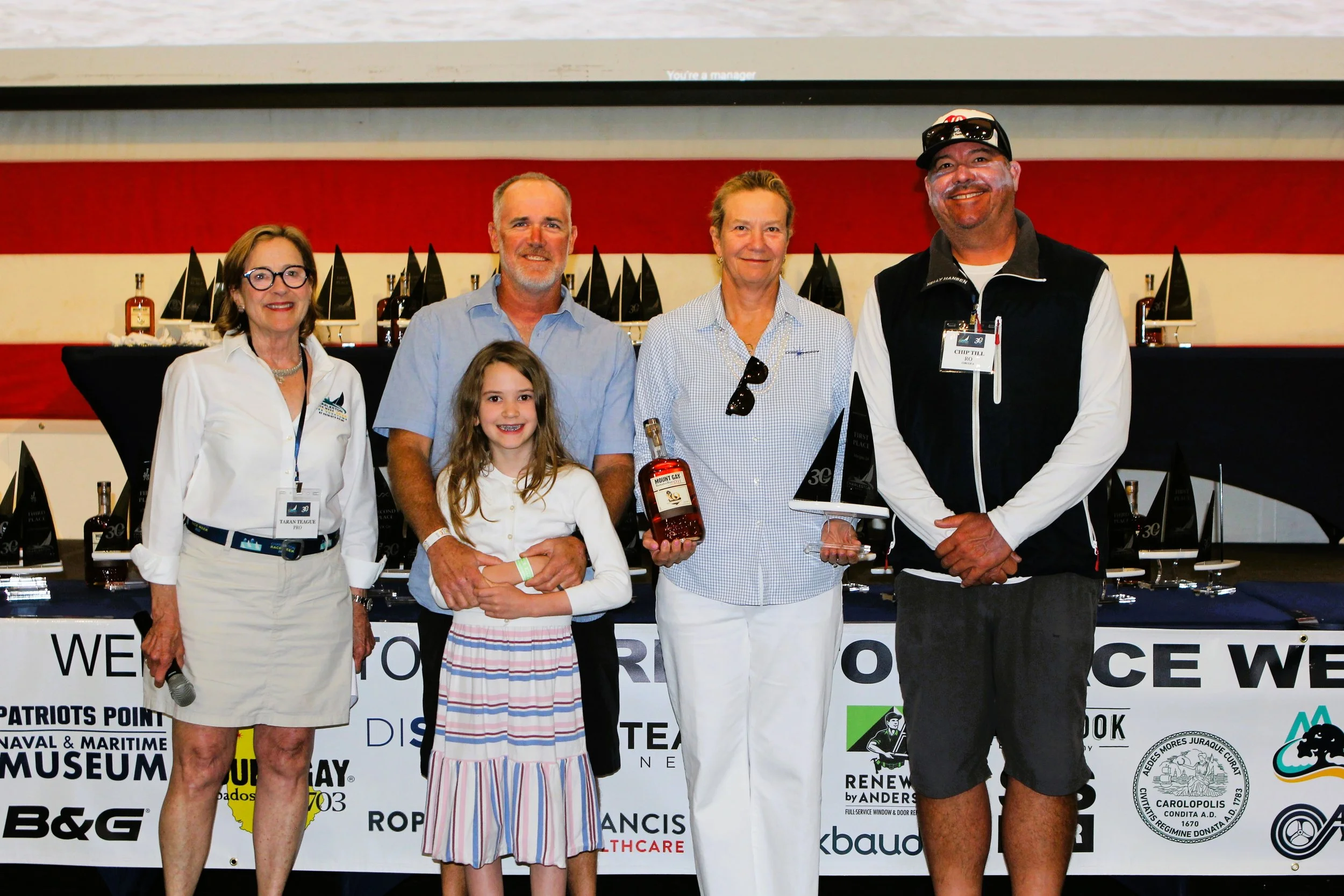
Congratulations to Charleston Race Week 2026 at Patriots Point Melges 24 Champion Laura Grondin at the helm of Dark Energy with crew Lucas Calabrese, Ian Liberty, Tommy Dietrich and Ted Hackney. Photo: Priscilla Parker Photography / Charleston Race Week at Patriots Point
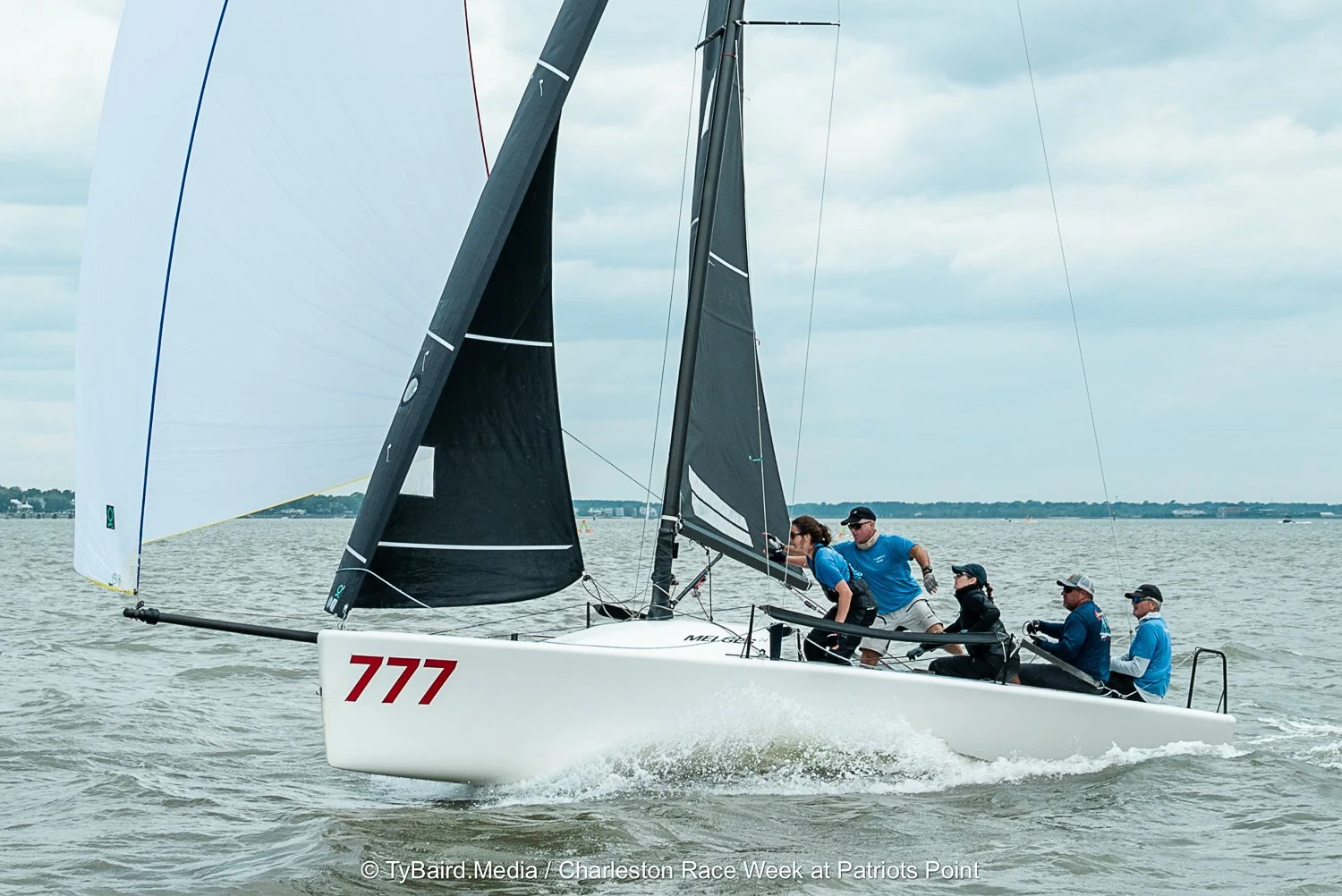
Longshot crosses the line in Charleston, where John Polson and team secured the Corinthian win with a composed, disciplined performance. Photo: Ty Baird Media / Charleston Race Week at Patriots Point
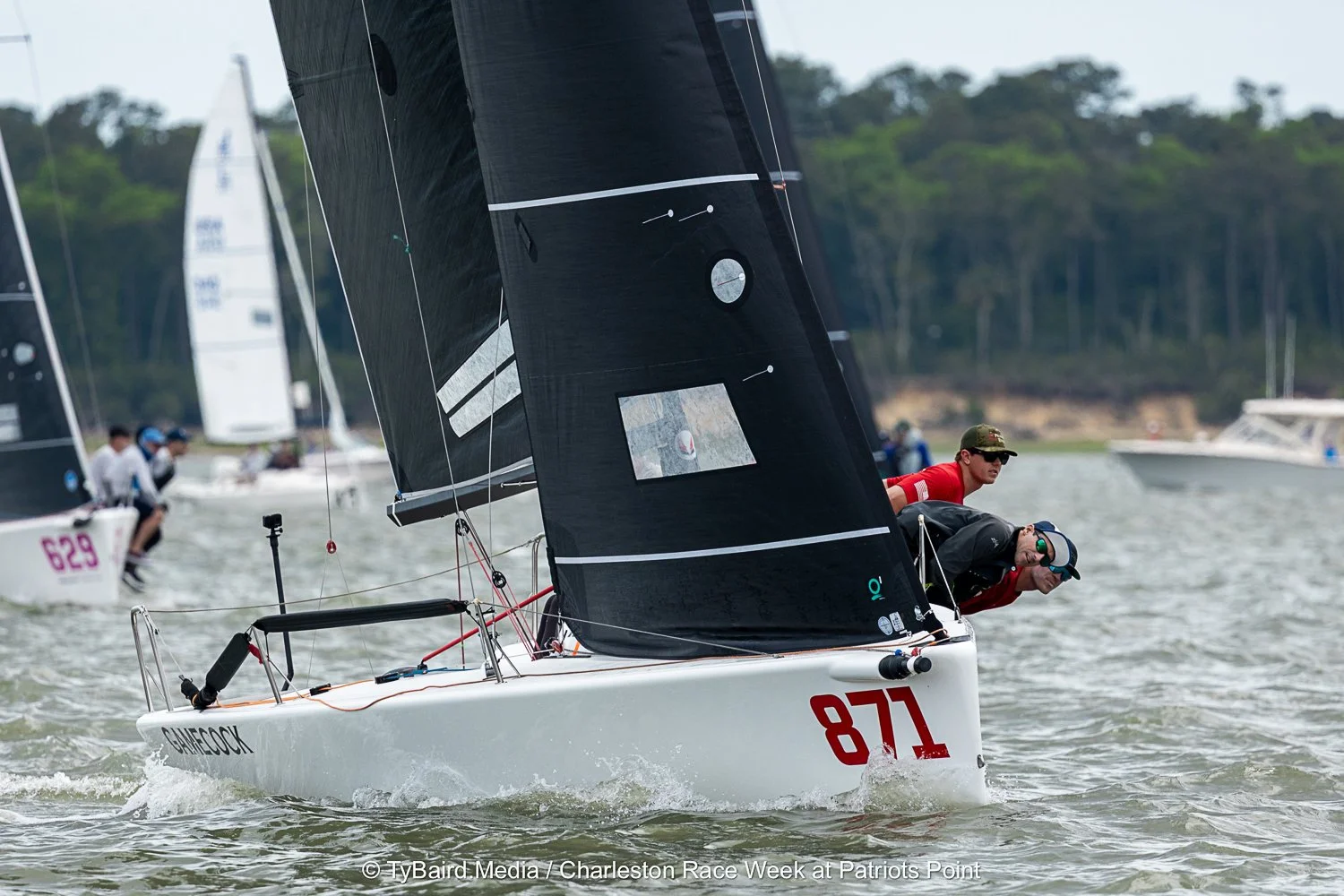
Gamecock in full stride at Charleston, where consistency continues to keep Peter McClennen at the top of the standings. Photo: Ty Baird Media / Charleston Race Week at Patriots Point